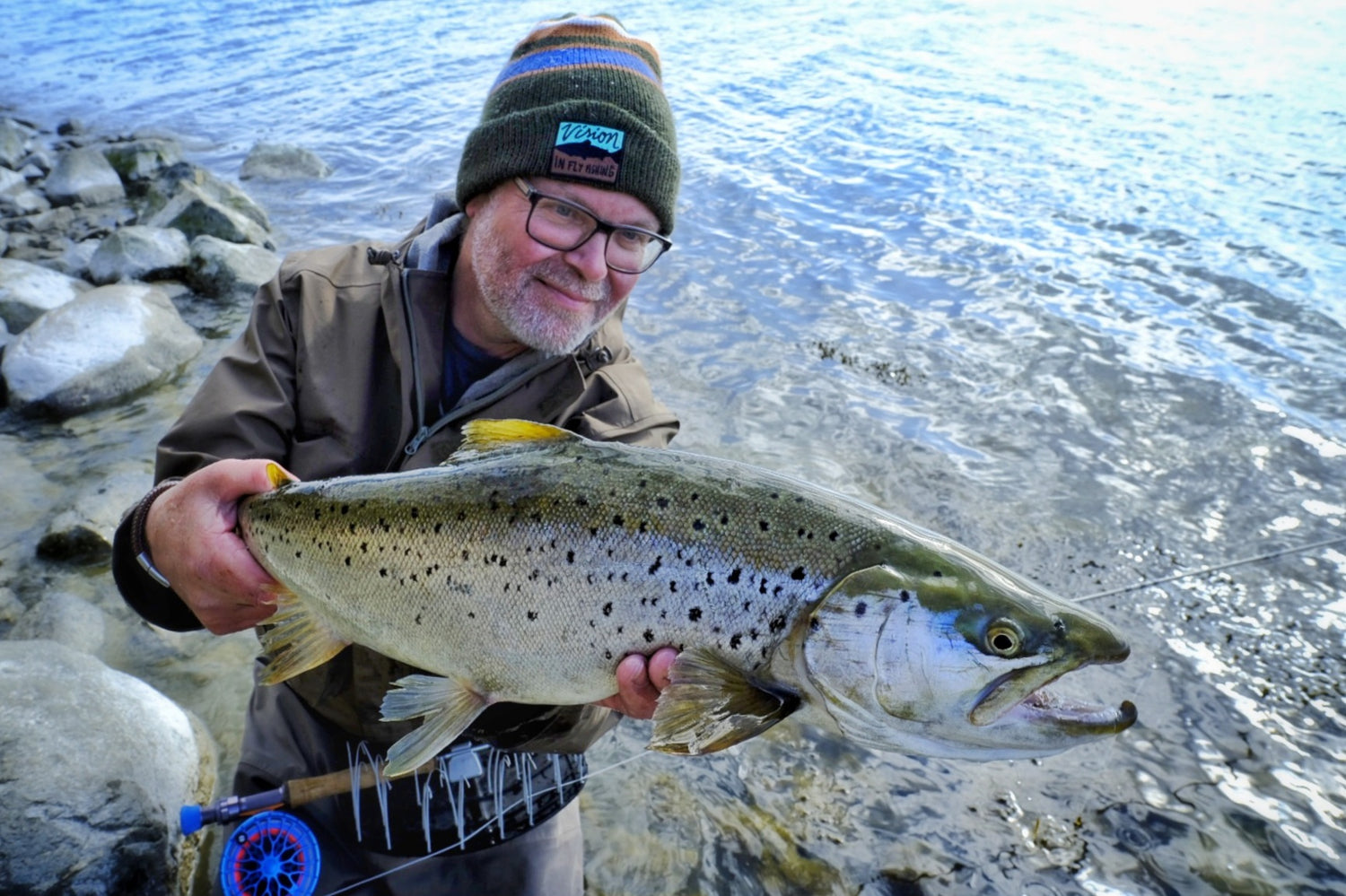
Text and photos: Jouni Simola / Virho
It’s hard to define when it all started. Was it the mid-80s, early 90s, early 2010s, or perhaps a few years earlier when I read a multi-year trend analysis on trout juvenile density in the River Vantaa? It’s easier to define why I’m keeping it up. It has given me so much—more than I ever imagined.
The Finnish River Restoration Association (Virho) was founded in 1990. I wasn’t around until 2011, when I attended a voluntary restoration day in one of the few noticeable brooks in Helsinki, the capital of Finland. It’s said that one never gets bored of watching a living fire, the face of a sleeping baby, and streaming water. I became fascinated by the streaming water in that urban brook, and even more so while learning from the people who were already fascinated and trained in doing the restoration. How the stream was altered into multiple habitats for insects, water plants, and fish, as well as various stream conditions to serve species with diverse needs, was really something else. Theory met practice and led to a steep, multidisciplinary learning curve that still challenges me today as I lead Virho in restoring heavily degraded Finnish nature.

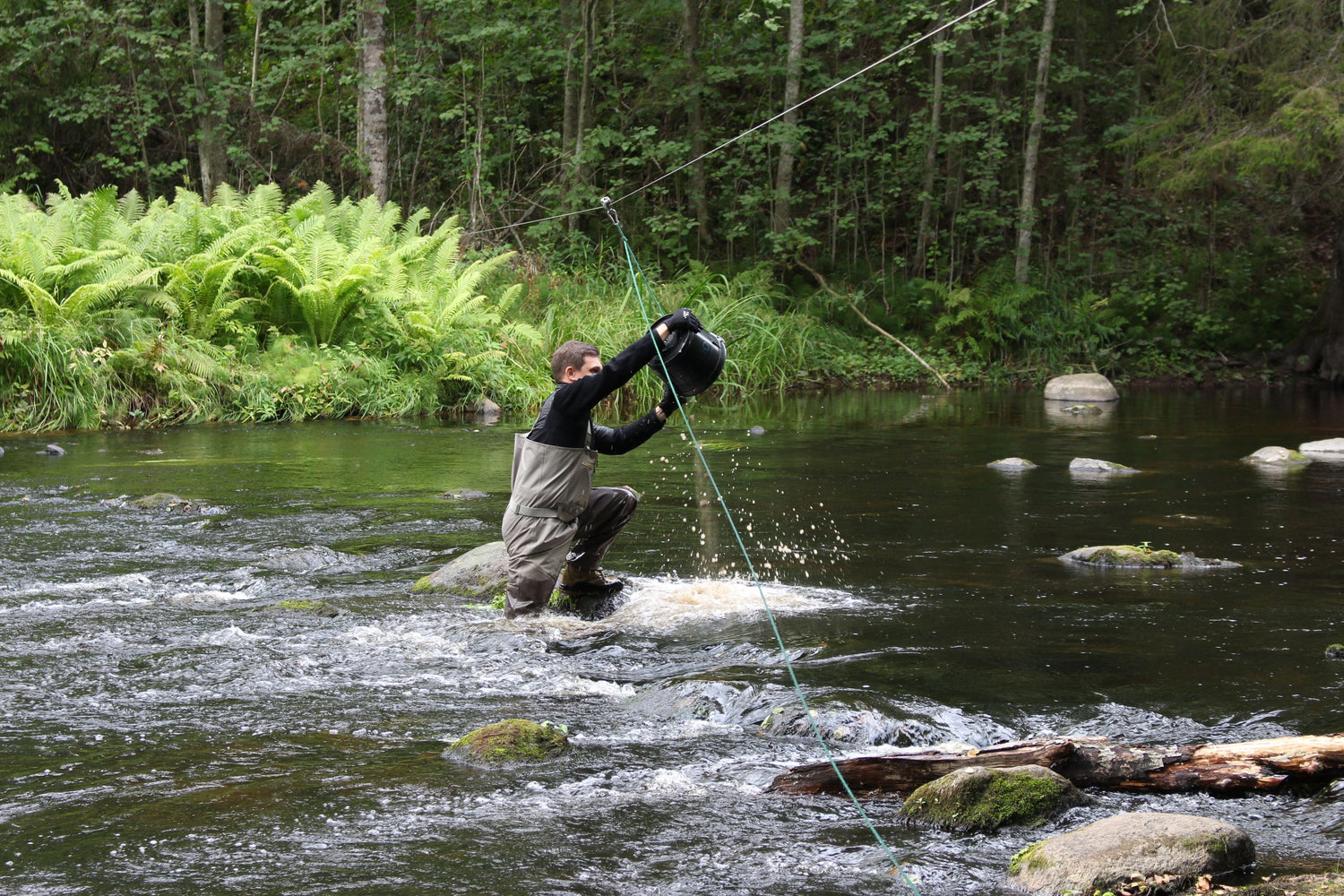
Jouni planting trout roe
For around 15 years, Virho employed only one person to lead the restoration on the River Vantaa and inland streams close to the capital region. He had, and still has, many seasonal workers as helping hands, concentrating solely on practical restoration work. I’ve been told by those early volunteers that the positive outcomes of planting trout roe in the early 2000s boosted their motivation to continue working on the River Vantaa. Fisheries authorities, politicians, and society as a whole regarded the River Vantaa as lost due to the heavy dumping of sewage water, agricultural and forestry runoff, and a dredged riverbed. Over the years, they were slowly proven wrong by individual volunteers who kept reporting sewage leaks, gathering financing, planning restoration sites, and farming roe to be planted—not to mention handling all the administrative work. A retired fisheries authority figure still hasn't eaten his promised "hatful of turd" now that sea-run trout are found dozens of kilometers upstream from the river mouth, where Finland's capital city Helsinki was founded in the mid-16th century. Such a short-sighted stance, as the history of Helsinki proves that migratory salmonids were fished at the river mouth by monasteries as early as the 14th century. Today, the River Vantaa contributes the most trout smolts to the Gulf of Finland out of all the rivers in the area.

Saving the Natives requires teamwork and dedication.
Being a public crown jewel and widely restored, the River Vantaa has its similarities to various rivers in southern Finland. The ice age some 10,000 years ago reshaped Finnish geology profoundly, leaving behind mostly thick clay on the very southern coast of Finland, while mineral soil is more dominant further inland. Salmonids, and the single populations of the freshwater pearl mussel (Margaritifera margaritifera) that depend on them, were still able to survive in rivers that ran through valleys to the sea over millennia. Stones were kept exposed by the currents in the rapids, bedrock provided some elevation, and plant roots still fight erosion in the clayish soil. Nature found its way, and the eventual destruction of the rivers was man-made, just as it is in many biotopes. Stream clearance for logging, land drainage, and concrete dams incurred habitat loss and a decline in water clarity—not to mention vast, severe drops in oxygen levels and the hygienic quality of natural waters, which left some areas empty of benthic fauna and sensitive fish.
Individual volunteers have had a larger-than-life effect on various streaming watersheds since the 90s. They have kept riverbed restoration and water protection in the headlines for years, making them a more mainstream topic. Today, the public sector puts more weight on these themes, which has led commercial engineering companies to recruit experts in the field. Civil society and activists still have their role in drawing attention to new circumstances in Finnish nature. Meanwhile, Virho has matured to adulthood, now employing three full-time people for their own watersheds, and this year, employing seven seasonal workers for practical restoration. I still enjoy seeing a pipeline-type, laminar current turn into a turbulent, rippling stream, just like the very first time. I guess the first fishing experiences in the 80s and trips to clear salmonid waters to Lapland in the early 90s lead me to find my way as a rookie to the very restoration day early 2010s. Without a few key people there I might not have entered river restoration activities.

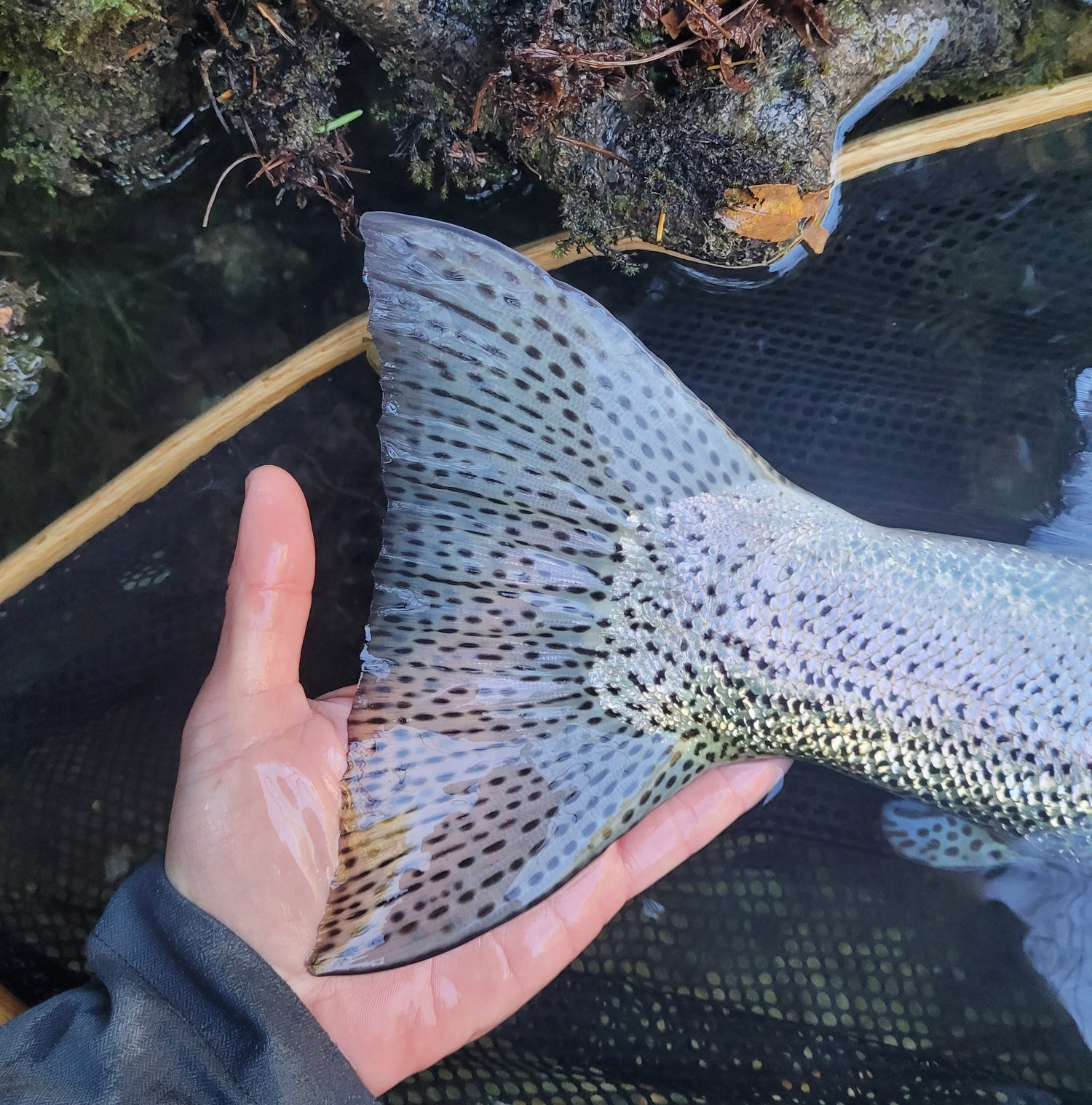
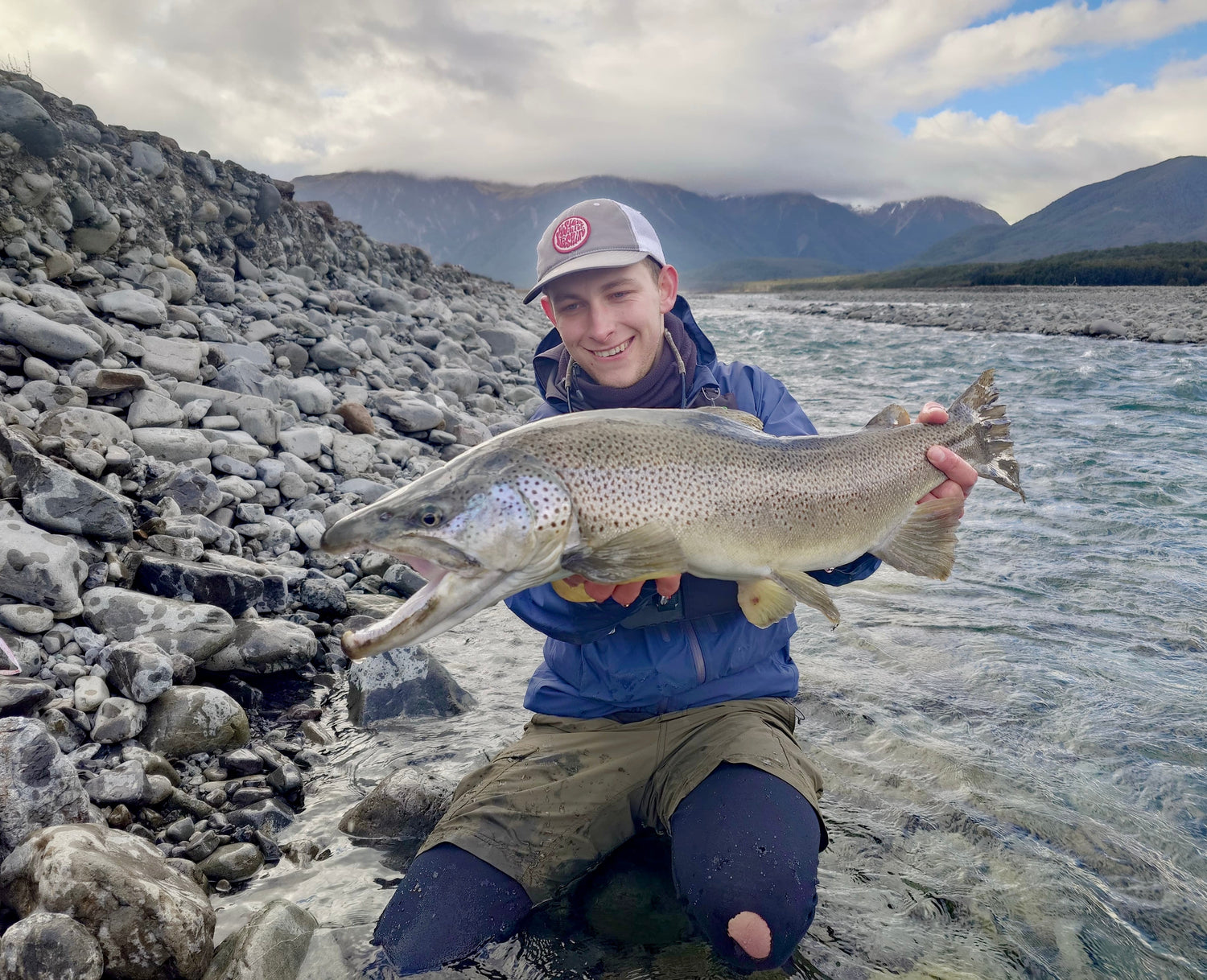
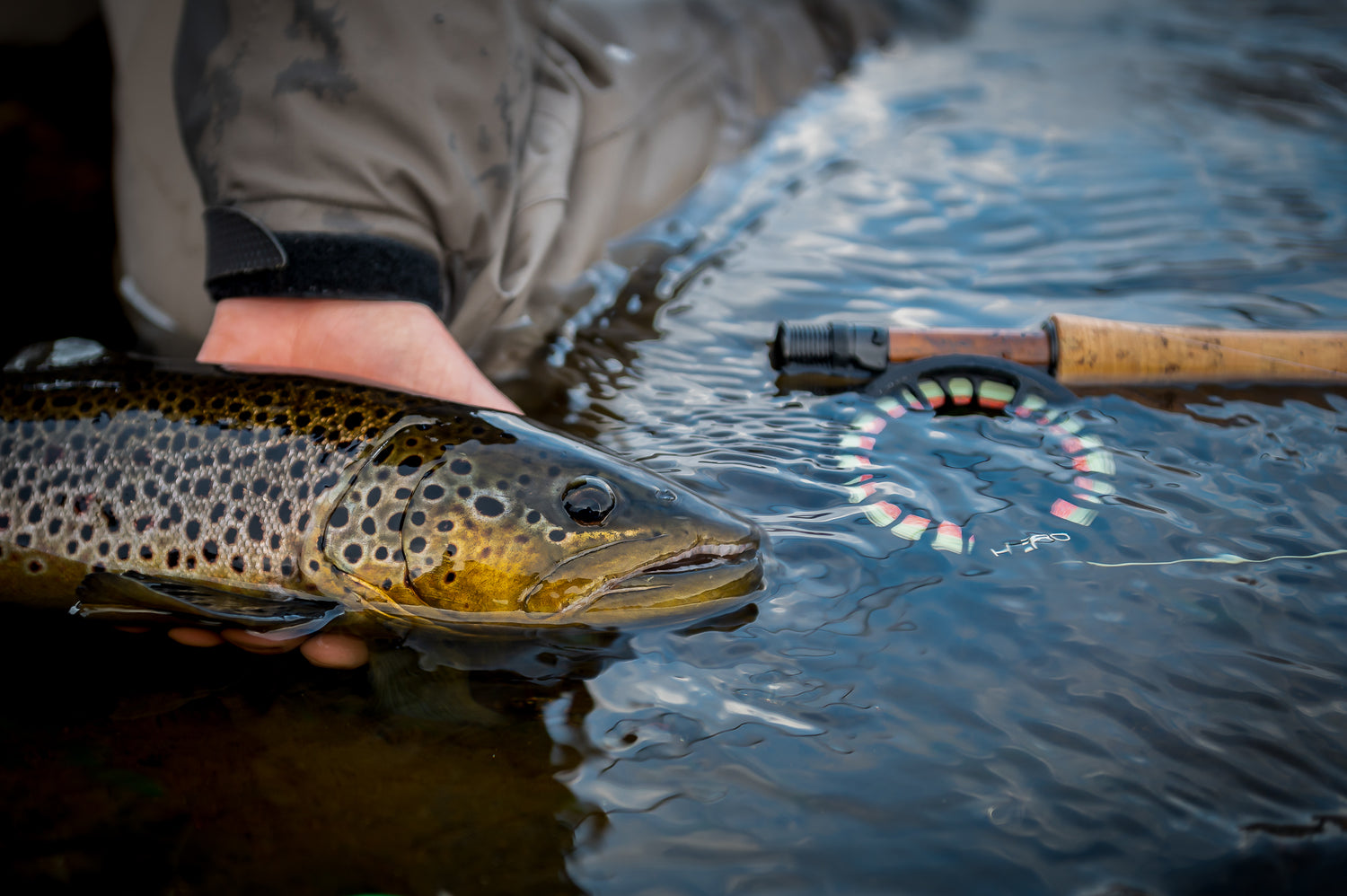
The result of a volunteer based work is here; a healty native brown trout (caught in research fishing).
Do you want to become Virho volunteer? Check out: https://virho.fi/jaseneksi/
Do you want to support Virho's work by donation? Check out: https://virho.fi/tuote-osasto/lahjoita-virholle/